How to Use Proposition 19 Property Tax Transfer When Selling Your North Park Home

How do I use my California Proposition 19 property tax transfer when I sell my North Park home and downsize in 2026?
You sell your North Park primary residence, buy a replacement home anywhere in California within two years, then file Form BOE-19-C with the county assessor to transfer your low Prop 13 tax base to your new home, up to three times in your lifetime.
Why This Matters for North Park Homeowners Right Now
If you bought your North Park Craftsman bungalow 20 or 25 years ago, you are probably paying somewhere between $2,000 and $5,000 a year in property taxes thanks to Proposition 13’s annual cap on reassessment. Meanwhile, the median single-family home price in 92104 hit $1,230,000 based on 41 SDMLS closed sales from July through early October 2026. That single-family median rose about 12% compared to the same 90-day period in 2025, per SDMLS data.
Here is the tension: you have potentially $700,000 or more in equity sitting in a home that may now be too large, too maintenance-heavy, or too many stairs. But buying a new home at today’s prices would trigger a full reassessment at market value, potentially tripling or quadrupling your annual property tax bill. This “golden handcuffs” problem keeps thousands of 55+ California homeowners stuck in homes that no longer fit their lives. Proposition 19 is the key that unlocks the handcuffs, and as someone who has helped sell 540+ homes predominantly right here in North Park and nearby metro areas, I can tell you that understanding this law is one of the most important financial steps you will take before listing.
How Proposition 19 Works for 55+ Sellers in North Park
Proposition 19, which remains active California law as of 2026, allows homeowners who are 55 or older, severely disabled, or victims of a wildfire or natural disaster to transfer their existing Prop 13 base year value to a replacement primary residence anywhere in the state. Before Prop 19, this transfer was limited to your own county or a handful of counties with reciprocal agreements. Now the whole state is in play.
You also get up to three lifetime transfers instead of the previous limit of one. That flexibility matters more than people realize. If you downsize now and then decide to relocate closer to grandchildren in five or ten years, you still have transfers remaining.
The Step-by-Step Process
- Step 1: Sell your current North Park primary residence in a qualifying transaction
- Step 2: Purchase or construct your replacement primary residence within two years of that sale
- Step 3: File Form BOE-19-C (Claim for Transfer of Base Year Value to Replacement Primary Residence) with the county assessor in the county where your new home is located
- Step 4: File within three years of purchasing the replacement, though filing promptly is strongly recommended
What I tell my clients is to begin the Prop 19 planning before they even list their North Park home, not after. The two-year clock and the filing requirements are rigid, and a misstep can cost you thousands of dollars annually for as long as you own the replacement property.
What Downsizing From North Park Actually Looks Like in 2026
You are sitting in one of San Diego’s most desirable zip codes. The Walk Score for 92104 is 86, and North Park consistently outperforms San Diego’s citywide year-over-year price growth. Homes in North Park are selling in an average of 32 days and closing at 100.3% of list price, based on recent SDMLS data. That means your home, when priced strategically and presented properly, will attract serious buyers quickly.
But where do you go? Here is where Prop 19’s statewide portability changes the calculation entirely. You are no longer limited to finding a smaller home within San Diego County. You can transfer your tax base to a condo in Carlsbad, a single-story home in Fallbrook, a cottage in San Luis Obispo, or a ranch property in Temecula.
Buying Down (Equal or Lesser Value)
If your replacement home costs equal to or less than what your North Park home sold for, your existing assessed value transfers directly. Your property taxes essentially stay the same. For someone paying $4,000 a year on a home now worth $1.2 million, buying a $750,000 condo without Prop 19 would mean reassessment to $750,000 and annual taxes around $8,500. With Prop 19, you keep that roughly $4,000 annual bill.
Buying Up (Greater Value)
You are not locked into buying down. If your replacement home costs more than your sale price, Prop 19 lets you keep your existing taxable base and add only the difference in market value. Additionally, if you purchase during the first year after selling, the replacement home can be worth up to 105% of the original home’s market value without any adjustment to the transferred base. That threshold increases to 110% during the second year, per the California Board of Equalization guidelines.
The North Park Market Advantage for 55+ Sellers
I have been licensed since 2005 and have spent the majority of my career selling homes in 92104. With 308 client reviews and a 4.9 out of 5 star rating, the McT Real Estate Group understands what it takes to maximize your sale price in this specific market. And the current numbers are working in your favor.
Single-family prices in North Park range from about $850,000 for fixers to $1.5 million or more for turnkey homes in the historic districts or near Balboa Park, per SDMLS data as of October 2026. Detached homes are moving quickly; the median days on market for detached homes was just 14 days in Q3 2026, and they sold at 98.8% of list price, according to SDMLS data. Meanwhile, the condo market moves slower, with months of supply ranging from 3.3 to 4.4, per SDMLS October 2026 data.
What does this mean for you as a downsizer? Your detached North Park home is the asset in highest demand. The market is rewarding sellers of single-family homes right now, and the equity you pull out fuels your Prop 19 strategy.
North Park Is Changing Around You
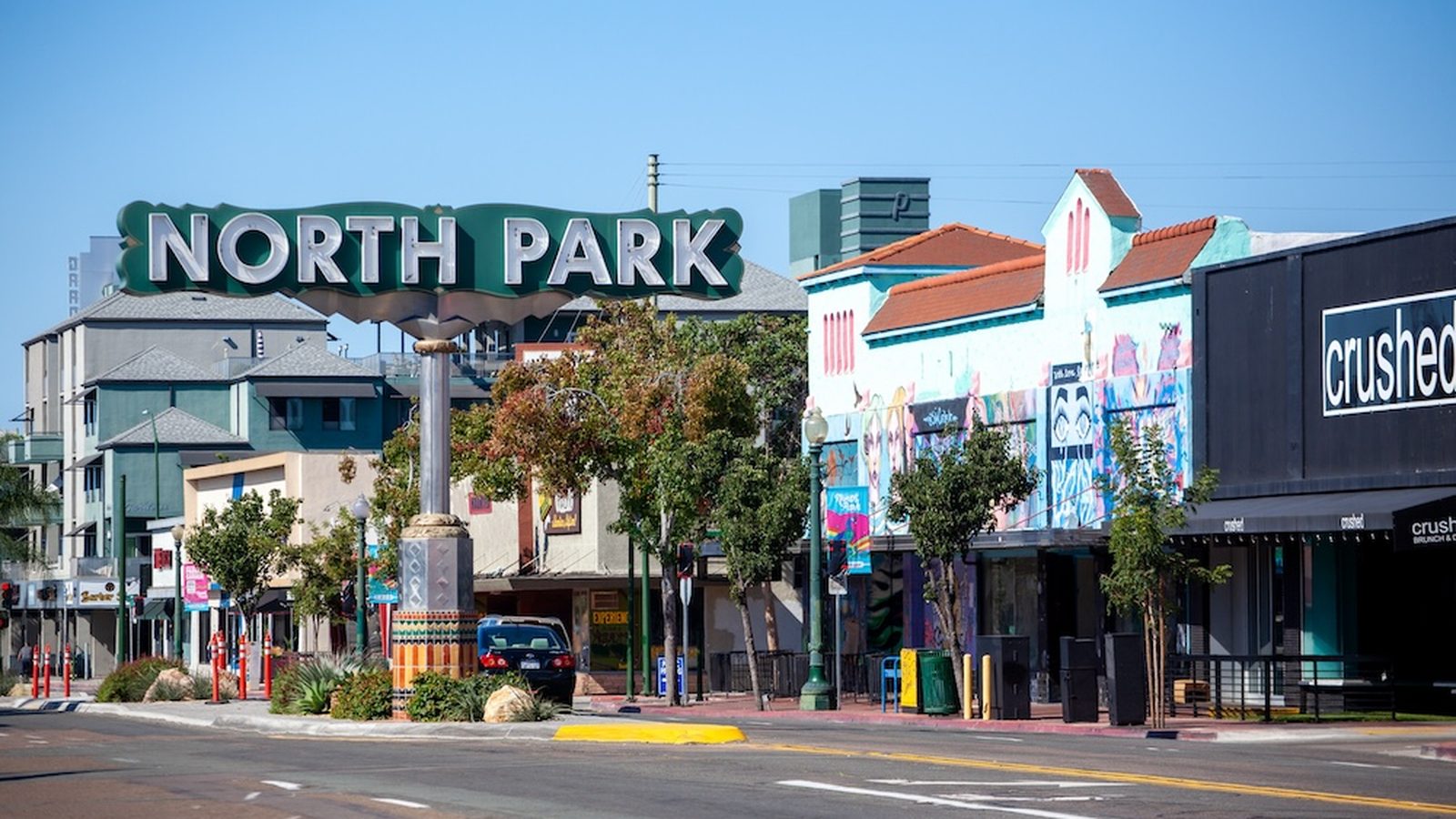
The neighborhood is also experiencing significant development. A $100 million line of credit announced by the San Diego Foundation is funding four affordable housing projects in North Park and Normal Heights, with one 38-unit project on Louisiana Street near University Avenue already breaking ground in October 2026. Near 28th and University, eight-story luxury condos are planned, and a building at Kansas and University was recently demolished for new development. The historic Newman Building near the iconic North Park sign at 30th and University is the subject of a redevelopment proposal for a seven-story mixed-use building with 92 apartments, currently facing community opposition.
All of this development signals strong long-term demand for the neighborhood, which supports your home’s value when you sell. But it also means the character of residential streets along Myrtle Avenue, Dwight Street, and Fern Street, with their Craftsman bungalows and Spanish Revival homes, is increasingly rare and increasingly valuable.
Critical Timing and Filing Details You Cannot Afford to Miss
The mechanics of Prop 19 are straightforward, but the deadlines are unforgiving. Here is what you need to have on your radar:
- Two-year purchase window: Your replacement home must be purchased or newly constructed within two years of selling your North Park home. Not two years from when you start looking. Two years from close of escrow.
- Three-year filing window: File Form BOE-19-C within three years of purchasing the replacement home. File it as soon as possible after closing on the new home.
- Primary residence requirement: Both your original North Park home and the replacement must be your primary residence. Investment properties and second homes do not qualify.
- Age verification: You must be 55 or older at the time of the sale of the original property.
One common mistake I see is homeowners assuming they can sell, rent for a few years, and then buy. The two-year window is firm. If you sell in January 2027, you need to close on your replacement by January 2029. Planning the sale and the purchase in coordination is essential, and it is something our team at McT Real Estate Group helps North Park sellers navigate as part of our full-service approach, which includes strategic pricing, professional staging, prep priorities, marketing, and negotiation.
Capital Gains and Prop 19: Two Separate Conversations
Do not confuse your Prop 19 property tax transfer with your federal capital gains tax obligation. They are completely separate.
Under IRC Section 121, you can exclude $250,000 in capital gains as a single filer or $500,000 as a married couple filing jointly, provided you have lived in the home as your primary residence for at least two of the last five years. For most long-term North Park homeowners, this exclusion covers a substantial portion of your appreciation. But if you purchased for $250,000 in the late 1990s and sell for $1.2 million, you are looking at roughly $950,000 in gains before the exclusion, which means some exposure above the $500,000 married exclusion.
Work with a CPA or tax attorney before you list. Prop 19 protects your property tax base. It does not reduce your income tax on the sale.
Frequently Asked Questions
Can I transfer my North Park property tax base to any county in California?
Yes. Proposition 19 expanded the transfer to the entire state. Before Prop 19, you were limited to the same county or a short list of participating counties. Now you can move from San Diego to Sonoma, Santa Barbara, or anywhere else in California and bring your low assessed value with you.
How many times can I use the Prop 19 property tax transfer?
You can use it up to three times during your lifetime, per the provisions of Proposition 19. Previously, only one transfer was allowed. This gives you flexibility to downsize now and potentially relocate again later without losing your tax base.
What form do I file to claim my Prop 19 benefit?
You file Form BOE-19-C (Claim for Transfer of Base Year Value to Replacement Primary Residence) with the county assessor in the county where your new replacement home is located. File within three years of purchasing the replacement home, though doing so promptly after closing is strongly recommended.
Does my replacement home have to cost less than my North Park home?
No. You can buy a more expensive home. If you do, your existing base year value transfers and only the difference between your sale price and the replacement purchase price gets added to the assessed value. During the first year after your sale, the replacement can be up to 105% of the original’s market value without any adjustment to the transferred base, according to California Board of Equalization guidelines.
What if I sell my North Park home but take longer than two years to buy?
You lose the Prop 19 benefit. The replacement home must be purchased or newly constructed within two years of the sale of your original primary residence. There are no extensions. This is why coordinating your sale and purchase timeline is so important.
Does Prop 19 apply to investment properties or second homes in North Park?
No. Both the original home you sell and the replacement home you buy must be your primary residence. Rental properties, vacation homes, and investment properties do not qualify for the base year value transfer under Proposition 19.
Can a surviving spouse use Prop 19 after one spouse passes away?
Prop 19 eligibility is tied to the individual homeowner. A surviving spouse who is 55 or older can qualify independently. Consult a California real estate attorney or CPA for guidance specific to your situation, as probate and trust structures can affect eligibility.
How does Prop 19 interact with the capital gains exclusion when I sell?
They are completely separate tax benefits. Prop 19 transfers your property tax assessed value to a new home (a California state benefit). The IRC Section 121 capital gains exclusion ($250,000 single, $500,000 married) reduces your federal income tax on the sale profit. You can potentially use both, but they operate independently.
Is there any legislative effort to repeal Proposition 19 in 2026?
While signature-gathering efforts and legislative discussions have taken place to repeal or amend Proposition 19 over the years, it currently remains the active law of the land in 2026 and continues to affect property transfers statewide. Plan accordingly, but stay informed.
Why should I work with a North Park specialist when selling my home before a Prop 19 transfer?
Maximizing your sale price directly strengthens your Prop 19 position because a higher sale price gives you more headroom to buy a replacement home of equal or lesser value. The McT Real Estate Group specializes in selling Craftsman bungalows and older properties that define this neighborhood, including those with foundation, plumbing, and electrical complexities that come with homes built in the early 1900s.
The Bottom Line
Proposition 19 gives you, as a 55+ North Park homeowner, the ability to take decades of equity from your home on 30th Street or Dwight or Myrtle, sell at today’s strong prices, and carry your low property tax base to a replacement home anywhere in California, up to three times. The rules are clear but the deadlines are firm: buy within two years, file Form BOE-19-C promptly, and make sure both homes qualify as your primary residence.
Your North Park home is one of the most in-demand asset types in all of San Diego right now. The question is not whether to use Prop 19. The question is how to time your sale and purchase to maximize the benefit. If you are thinking about downsizing and want to understand exactly what your North Park home is worth in today’s market, call me at 619-736-7003 or visit the McT Real Estate Group at 2307 Fenton Pkwy, Ste. 107, San Diego, CA 92108. I have been selling homes in 92104 since 2005, and helping North Park homeowners make this transition is one of the most rewarding parts of what I do.
*This blog is for informational purposes only and does not constitute legal, tax, or financial advice. Proposition 19 rules are subject to change. Consult a qualified California tax professional or real estate attorney for guidance specific to your situation.*